Windshield
Tint is only allowed on the strip above the manufacturer's AS-1 line, or within the top 5 inches if there's no line. That strip can't be red or amber.
Guide • Oklahoma Window Tint Laws
How dark can you legally tint your windows in Oklahoma? Here's a plain-English summary of the state rules—what the numbers mean, which windows they cover, and what to ask before you pick a film.
Updated October 2026
The short answer
Under Oklahoma law (47 O.S. § 12-422), tinted side and back windows must let at least 25% of light through, and the film can't reflect more than 25% of light.
That 25% is measured with the film and the glass together. Factory glass already blocks some light, so a 25% film on top of tinted factory glass can end up darker than 25% overall.
Window by window
Tint is only allowed on the strip above the manufacturer's AS-1 line, or within the top 5 inches if there's no line. That strip can't be red or amber.
Film and glass together must allow at least 25% light transmission, with no more than 25% reflectance.
The statute uses the same 25% light transmission and 25% reflectance limits for side and back windows. Some vehicle types and factory privacy glass raise their own questions—ask us about yours.
Mirror or mirror-like finishes aren't considered legal sunscreening devices under the statute.
What VLT means
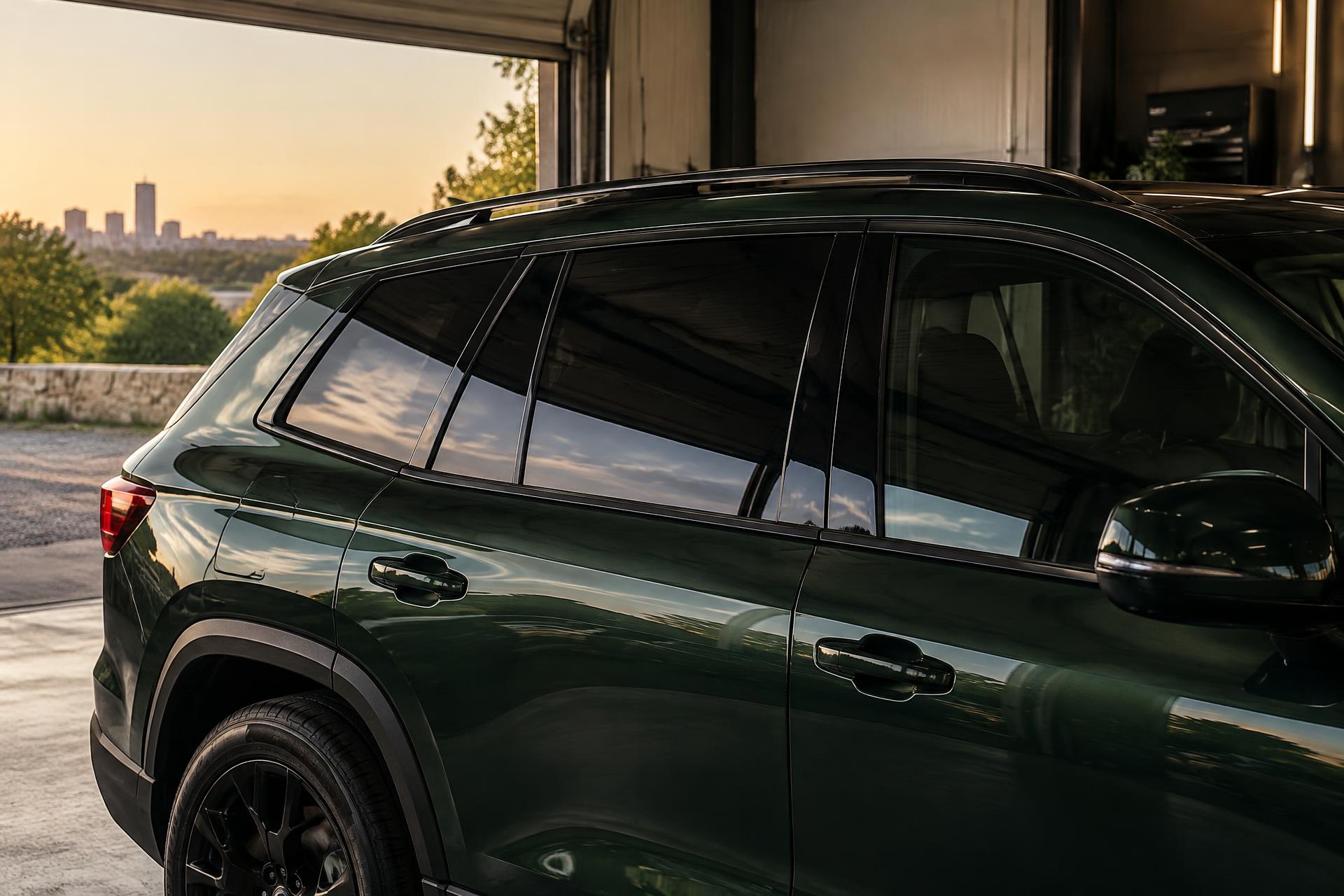
Tint is labeled by VLT—visible light transmission. A 50% film lets half the light through. A 5% film (often called "limo") lets very little through and isn't legal on side windows in Oklahoma.
Darkness and heat rejection aren't the same thing. A lighter ceramic film can manage heat well without going dark, which is one reason drivers who want comfort while staying legal often look at ceramic.
Compare ceramic window tintExceptions
The Oklahoma Commissioner of Public Safety can issue an exemption based on a written statement from a licensed physician. Keep the paperwork in the vehicle.
The statute includes separate provisions for some older vehicles. If yours is older, ask before assuming the standard rule applies.
If the rear window is tinted, the vehicle should have working outside mirrors on both sides.
Important
This guide is a general summary, not legal advice. Tint laws can change, and enforcement happens at roadside stops, not at an inspection lane. Vehicle owners are responsible for complying with current law.
For the official text, look up Oklahoma Statutes Title 47, Section 12-422. If you're unsure what's right for your vehicle, ask us before the film goes on—that's a lot easier than taking it off.
Ask us about legal tint optionsGetting tint the right way
You don't need to memorize the statute. Bring the vehicle and your questions—we'll walk you through it.
Year, make, model, and whether it has factory privacy glass.
We'll talk shade, film type, and what fits the rules.
Choose a time that works for you.
Less glare, less heat, and no guessing.
Tint law questions
Ready for tint?
Tell us your vehicle and the look you want. We'll give you straight answers on options that fit.
Legal tint? Okie dokie.